
Can Small-Molecule Peptide Raw Materials from a Peptide Factory Be Directly Applied to Medical Aesthetic Skincare Products?
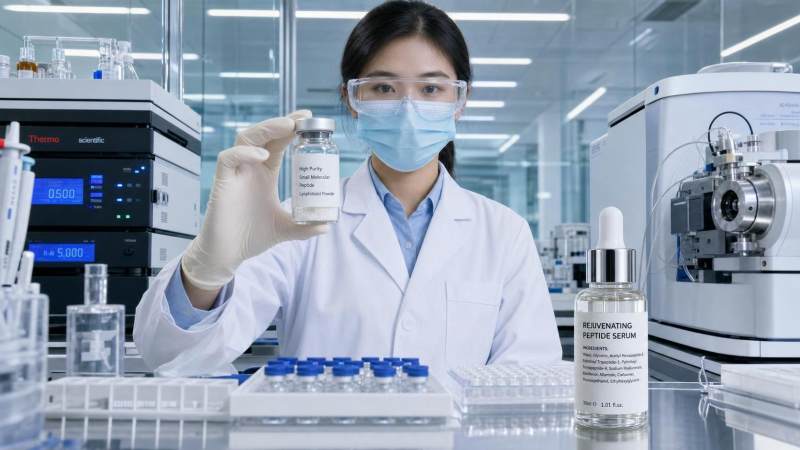
With the mainstream adoption of "functional skincare" and "scientific beauty" concepts, bioactive small-molecule peptides—such as copper peptides, oligopeptides, and palmitoyl tripeptides—have become core functional ingredients in medical aesthetic and high-end cosmetic formulations. When collaborating with a professional peptide contract manufacturer, many emerging brand owners and purchasing managers raise a fundamental question: Can high-purity small-molecule peptide raw materials freshly shipped from the peptide factory be directly applied to medical aesthetic skincare products?
The objective answer is: No, they cannot be used directly. They must undergo scientific formulation, blending, and rigorous regulatory manufacturing processing.
Although small-molecule peptides naturally exhibit excellent biological activity, there is a vast technical and chemical gap between a raw bulk ingredient leaving a manufacturing facility and a finished, consumer-ready cosmetic product. Transforming bulk peptides into safe, marketable products requires overcoming three major scientific barriers:
1. Precision Concentration Control and Safety Dilution
Raw materials supplied by a peptide factory typically exist as ultra-high-purity lyophilized (freeze-dried) powders or highly concentrated stock solutions. This pristine state is engineered primarily to ensure maximum stability during transit and storage. Utilizing these high-purity concentrates directly on human skin is not legally permissible or dermatologically sound; excessive concentrations may trigger skin barrier irritations rather than delivering benefits. Consequently, cosmetic formulation engineers must meticulously calculate safety profiles and dilute the active components into scientific ranges proven to be skin-compatible.
2. Advanced Formulations and Transdermal Delivery Systems
Isolated peptide molecules can be highly sensitive to environmental factors such as ambient oxidation, temperature shifts, and pH fluctuations, which can trigger degradation and a loss of bioactivity. To maintain a peptide's efficacy within a cream, serum, or lotion, it must be integrated into a sophisticated delivery vehicle. This involves pairing the peptide with compatible preservative networks, stabilizing agents, and advanced transdermal delivery systems (such as liposomal encapsulation or nano-emulsions). These delivery technologies protect the delicate peptide chains, enabling them to successfully penetrate the stratum corneum and work synergistically with other ingredients.
3. Regulatory Compliance Auditing and Finished Product Registration
According to global cosmetic industry regulations and advertising standards, raw materials cannot be distributed to consumers without a completed product dossier. Before the finished skincare batch can be brought to market, it must undergo thorough safety evaluations, including comprehensive microbial analysis, heavy metal screening, and patch testing for skin irritation. While a reputable peptide factory provides a Certificate of Analysis (COA) confirming the quality of the raw ingredient, the brand owner is legally responsible for conducting finished-product testing and acquiring regulatory filings to ensure all marketing claims are true, clear, and fully compliant.
Summary
Bulk small-molecule peptide raw materials sourced from a specialized factory serve as the high-quality foundation for advanced skincare innovations. However, they must go through the standard channels of professional formula development, stability testing, and regulatory clearance before transforming into safe medical aesthetic solutions. Partnering with an experienced peptide factory that provides fully documented, standardized raw ingredients along with profound technical support is the most effective way for brands to ensure a smooth transition from lab to retail market.